How to Buy Mushka (Croaker): Freshness Checks and Best Cuts
Mushka, the tigertooth croaker, is one of the fish Karachi families reach for when they want something mild, easy to eat and good for a crowd. It is the fish behind many plates of crisp, besan-coated fried fish and countless pots of weekday salan. Because Mushka's flesh is naturally soft, a fish that is past its best shows it quickly – it turns mushy and falls apart in the pan. Knowing what to look for, and which cut to ask for, makes all the difference. This guide walks you through both, whether you are at the market or ordering Mushka online from FishMart.
First, Know What Mushka Looks Like
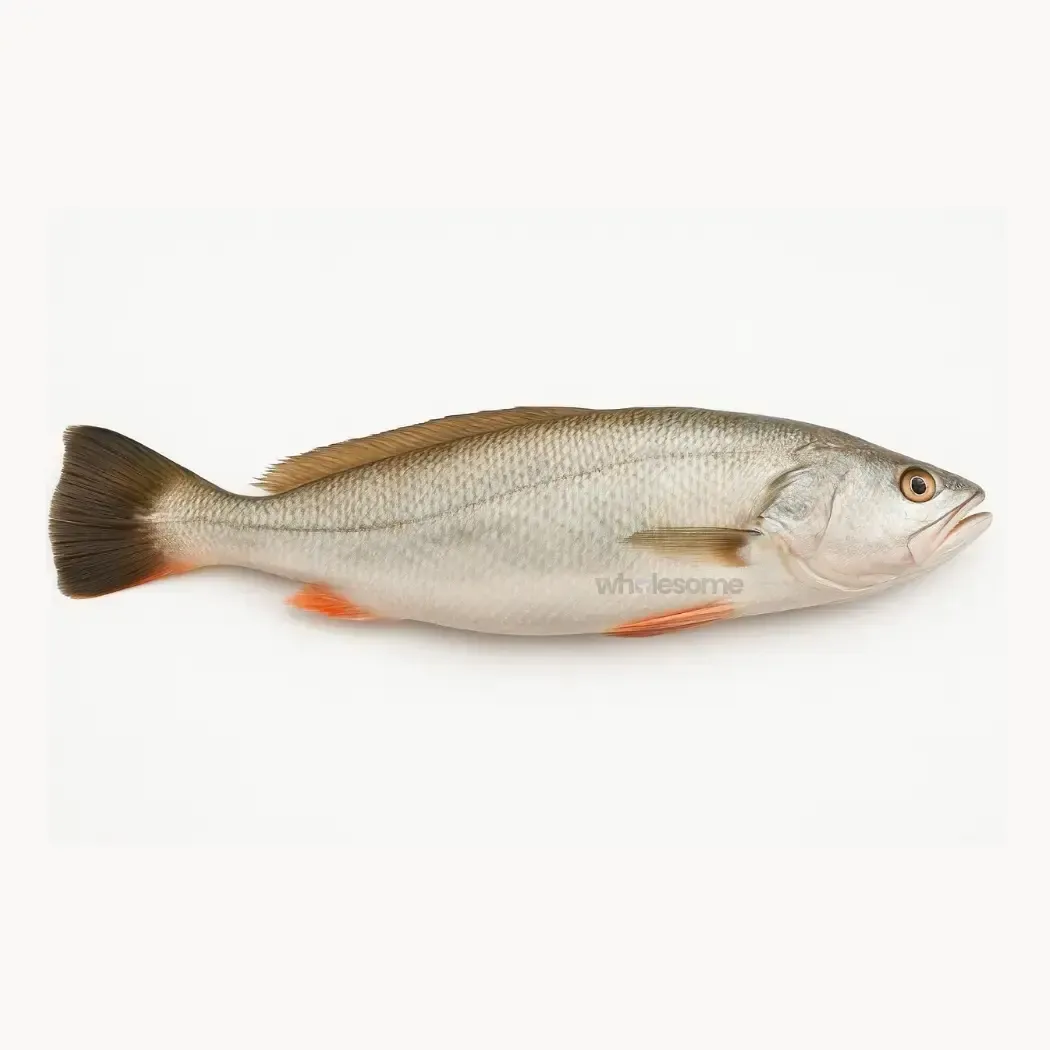
Mushka (Otolithes ruber) belongs to the croaker and drum family. A whole fish has a long, fairly slim body, silvery sides and a back that can carry a faint golden, bronze or greyish tint. The most telling feature is the mouth: there are one or two sharp, fang-like teeth at the tip of the upper jaw, which give the fish its English name. The tail is slightly pointed rather than deeply forked. If a fish being sold as Mushka has a deeply forked tail, a tall flat body or bright red skin, it is a different species.
Freshness Checks for Whole Mushka
Eyes
Fresh Mushka has full, bulging, glossy eyes with a black pupil. As the fish ages the eyes sink, flatten and become cloudy or grey. Slightly cloudy eyes alone are not always a deal-breaker if everything else is good, but sunken, milky eyes are a clear warning.
Gills
Lift the gill cover. You want bright red to pinkish-red gills that look moist and clean. Brown, grey or slimy gills with a sour smell mean the fish has been out of the water too long or has not been kept cold enough.
Skin and scales
The skin should be shiny, with the silver and gold tones looking bright rather than dull. A thin, clear layer of natural slime is normal; thick, sticky or yellowish slime is not. Scales should be attached firmly rather than falling off at a touch.
Smell
Good Mushka smells of clean seawater, almost like fresh cucumber or sea breeze. A strong ammonia, sour or "old fish" smell is a sign to say no, whatever the fish looks like.
Firmness
This is the most important test for Mushka. Its flesh is softer than that of Surmai or Heera even when perfectly fresh, so it will never feel rock-hard. But it should still spring back when you press it gently with a finger. If the dent stays, or the belly feels soft and loose, the fish will break apart during cooking.
Checking Mushka Slices and Boneless Cuts
When you buy cut fish you lose the clues from the eyes and gills, so look closely at the flesh itself:
- Colour: the flesh should be white to off-white and slightly translucent, not grey, yellowed or dry at the edges.
- No gaping: the flakes should hold together. Fillets that are splitting into separate flakes before cooking are past their best.
- Moisture: surfaces should look moist but not sitting in milky liquid.
- Smell: the same clean sea smell as a whole fish. Cut fish that smells sour should be avoided.
- Bloodline: any dark strip along the backbone area should be red, not brown.
Which Size and Cut for Which Dish
Mushka comes in a range of sizes depending on the catch. Medium and larger fish give thicker slices and better fillets; very small fish suit whole frying. Here is a practical way to match the cut to your recipe:
| Dish | Best cut | Why |
|---|---|---|
| Lahori fried fish | Boneless Biscuits or Boneless Fingers | Even, bite-sized pieces cook quickly inside a crisp besan coating. |
| Fish pakoras | Boneless Biscuits | Small cubes are ideal for batter and snack plates. |
| Salan | Thick Slices | Bone-in slices keep their shape better in gravy and add flavour. |
| Masala tawa fry | Thick Slices | Thicker pieces stay moist and do not break when turned. |
| Baked or steamed whole | Whole and Gutted | The skin and bone hold the soft flesh together. |
| Children's meals | Boneless Fingers or Boneless Fillet | No bones to worry about, mild flavour. |
If you like to cut your own pieces at home, Headless and Gutted is a tidy option. If you prefer to see the whole fish and clean it yourself, choose Whole (uncleaned).
Seasonality in General Terms
Croakers are caught along the Sindh and Balochistan coast, and supply varies with weather, sea conditions and fishing activity. Many Karachi households eat more fish in the cooler months, and winter is traditionally seen as fish season, but there is no single fixed "Mushka month". The simplest approach is to ask what is in good supply on the day and be flexible about size.
How to Order Mushka Online
When you order from the /product-categories/fresh-sea-fish section, a few details help you get exactly what you need:
- Choose the cut from the options on the Mushka product page – whole, gutted, slices or boneless.
- Mention your dish in the order notes, for example "for salan, thick slices please" or "for Lahori fry".
- Think about weight before cleaning. Whole fish loses head, gut and fins during cleaning, and boneless cuts lose the frame, so the cleaned yield is lower than the starting weight. Check the product page for how weight is listed.
- Ask about size if you need very large slices or small whole fish for frying.
- Plan your storage – if you are not cooking within a day or two, portion and freeze it as soon as it arrives.
Common Mistakes to Avoid
- Ordering thin slices for salan. Thin Mushka slices fall apart in gravy. Ask for thicker cuts.
- Using Mushka for a hard-boiled karahi. Long, vigorous cooking suits firmer fish such as Red Snapper (Heera); Mushka is better gently simmered or fried.
- Leaving fish in a warm car or kitchen. Soft-fleshed fish deteriorates quickly when warm. Refrigerate straight away.
- Washing for too long. Soaking Mushka in water makes it waterlogged and even softer. Rinse quickly and pat dry.
- Judging by firmness alone. Remember Mushka is naturally soft; combine the touch test with eyes, gills and smell.
Bringing It Home
A good Mushka is bright-eyed, red-gilled, sweet-smelling and springy, and the right cut depends on how you plan to cook it. Once you have your fish, try our Mushka recipes for Lahori fry and salan, or browse today's stock of fresh Mushka (Croaker) and choose the cut that suits your family's table.
Frequently asked questions
Is soft flesh a sign that Mushka is not fresh?
Not on its own. Mushka is naturally softer than fish like Surmai. Fresh Mushka still springs back when pressed; flesh that stays dented, along with dull eyes or a sour smell, means it is past its best.
How do I recognise a real Mushka?
Look for a long silvery body with a golden or bronze tint, a slightly pointed tail and sharp fang-like teeth at the front of the upper jaw.
Should I buy small or large Mushka?
Larger fish give thicker slices and better boneless cuts, which suit salan and Lahori fry. Small fish are fine for frying whole.
What should I write in the order notes?
Mention the dish you are cooking and any size or thickness preference, for example 'thick slices for salan'. This helps the team prepare a suitable cut.